garage door spring replacement
<!DOCTYPE html>
Protecting Your Loading Bay from Salt Corrosion and Grime Build Up
Protecting Your Loading Bay from Salt Corrosion and Grime Build Up
Buffalo, NY loading bays see more chloride spray, road brine, and freeze-thaw stress than most cities. Facilities along the Buffalo River, the First Ward, and South Buffalo face long winters, lake-effect snow, and slush tracked in by trucks all day. That mix beats up rolling steel doors, dock levelers, and operators. It jams photo-eyes, pits steel, and burns out motors that fight ice. A-24 Hour Door National Inc supports these facilities daily with on-site diagnostics, 24/7 emergency response, and practical prevention plans that hold up in Erie County conditions.
The Erie County context: why Buffalo loading bays corrode fast
Road salt is tough on steel. Buffalo streets see heavy sodium chloride brine and, at times, calcium and magnesium chloride. Plows spray, trucks carry the residue, and snowmelt drags it into the dock pit. The chloride ions pass through thin paint film and start corrosion at bolt holes, welds, and nicks. Moisture stays high near Lake Erie and the Buffalo River, so the electrolyte stays active. Freeze-thaw cycles in 14203 and 14210 expand tiny coating breaks into large blisters. That is why endlocks seize, bottom bars pit, and barrel assemblies develop rough spots that shred weather stripping.
Older industrial corridors from Kaisertown to Lovejoy often have legacy pits and trench drains that no longer move water well. Pooling brine under a dock leveler eats the lip hinge and pivot pins. It also pushes vapor up into guide tracks. If the brushes and bottom seals are worn, the vapor condenses on the slats overnight. The door wakes up frozen to the sill, motors strain, and torsion springs cycle harder than design. Failures follow: off-track doors, misaligned slats, and snapped springs.
Facilities near Canalside, KeyBank Center, and the Buffalo City Hall zone report similar patterns. The loading calendar spikes during storms. Vendors push for the same dock slot times. Doors run hot, then sit cold. That thermal swing pumps moist salted air into bearings and chain hoists. Without the right grease and heater kits, jackshaft operators and radio control enclosures fog, then short.
How corrosion and grime show up on roll-up and overhead systems
Salt corrosion does not start with holes. It starts with drag, noise, and electrical faults. A facility manager in South Buffalo notices that the high-speed rolling door cycles slower on Monday mornings. The door hesitates an inch off the floor. The photo-eye amber light flickers because of brine film. The chain hoist feels gritty. The door slats grind where the zinc layer wore thin. That same week a bottom brush tears on a dented bottom bar. The guide track fills with black slurry from diesel soot and salt crystals. Small details add time to every trailer. Two minutes per cycle across 80 cycles is hours of delay in a week.
On the electrical side, operators with unheated NEMA 1 enclosures develop condensation. Boards corrode at screw terminals. Limit encoders drift. Motor windings take on moisture and speed controllers error out. Fire-rated doors that require regular drop-testing start to fail the test. On the structural side, endlocks loosen due to rust creep around fasteners. Bearing plates show rust jacking. A weather strip loses elasticity from cold and salt exposure, leaving a 0.25-inch gap. Air loss climbs, and heated spaces like Amherst and Williamsville cold storage docks waste fuel all winter.
Engineering choices that hold up in Buffalo’s salt belt
Material and coating decisions change outcomes. Rolling steel door slats with heavy-gauge galvanized steel and a durable topcoat last longer in Erie County. Powder coats over hot-dip galvanizing resist underfilm creep better than alkyd paints when chips occur. Two-part epoxies and polyurethane topcoats give better chemical resistance along the Buffalo River and Peace Bridge corridors where spray is strong. Stainless fasteners in 304 work for dry zones, but 316 stainless handles chloride splash near truck aprons better. Aluminum guides need proper anodizing and isolation washers to avoid galvanic couples with steel hardware. A small nylon isolator under a mixed-metal bolt prevents fast-start corrosion around guide mounts.
For bottom bars and sill interfaces, UHMW wear strips cut friction and resist swelling. For the bottom seal, EPDM stands up to salt and cold. Neoprene often hardens sooner in repeated freeze cycles. Weather stripping that includes a secondary brush improves air control across the slit at the sill plate. For barrels and shaft components, zinc-rich primers under a baked enamel top finish slow pinhole rust from small scratches during service. Chain hoists benefit from nickel-plated chains in wet docks and food distribution facilities in North Park and Tonawanda.
Operators need cold-rated features in Western New York. Jackshaft openers should sit in NEMA 4 or 4X enclosures near bays exposed to spray. Low-temp rated lubricants keep bearings free at single-digit temperatures. VFD controls with soft start reduce stress when slats lift off icy sills. Heated photo-eyes prevent false trips from frost. Radio controls need sealed housings. Where budgets allow, high-speed Rytec fabric doors with heated side columns and advanced weather sealing keep traffic moving while holding heat. In logistics hubs near 14203, these systems cut snow blow-in and grime tracking by allowing fast open-close cycles even in gusty conditions.
A Buffalo-ready cleaning and lubrication program
An effective program is simple and repeatable. The target is to remove chlorides, remove grit, and protect the film. Rinsing is the most important step. Many crews skip it in winter, which lets salt stay active on slats and guides. Warm water works better than cold because it dissolves salt faster. Follow with a pH-neutral cleaner. Avoid products with chloride content. Avoid harsh alkalis that burn protective films. Rinse again with clean water. If available, a deionized final rinse reduces spots and cuts residues that can trap more dirt.
Lubrication must match the temperature. In Buffalo, off-the-shelf greases thicken. Use low-temperature synthetics on bearings, rollers, and chain hoists. Dry-film lubricants with moly or PTFE on guide tracks reduce grime bonding. They also avoid attracting dust the way sticky oils do. Keep lubricants off photo-eyes and encoder discs. After lube, wipe away excess to stop drip lines that catch salt dust from passing trucks.
Dock levelers need more than a rinse. The pit collects the worst of the grime. A quarterly pit clean-out in South Buffalo facilities shows how much brine sits under the deck. Pump standing water, scrub the pan, and treat hinge points. Grease lip pins and pivot points with a water-resistant grease. Inspect welds at gussets for rust jacking. Check the deck plate around the rear hinge for scale buildup. If you see layered flakes, plan for prep and recoat before spring thaws swell the damage.
Weekly winter wash in under 25 minutes
- Rinse slats, guides, bottom bar, and sill with warm water to dissolve salt.
- Apply a pH-neutral cleaner, agitate with a soft brush, then rinse clean.
- Dry critical areas, especially around photo-eyes, encoders, and terminals.
- Apply low-temp dry-film lube to guides and light grease to hoist chains.
- Wipe seals and brushes; confirm the astragal makes full contact with the floor.
Preventing frozen tracks, brittle springs, and motor burnout
Frozen guide tracks stop work. Prevent with heated mullions, wind locks that keep slats aligned, and shuttle heaters in the operator zone. Where power draw is a concern, apply low-temp lubricants and run a short pre-cycle during the first shift. That breaks any weak bond at the sill before heavy pressure builds.
Torsion springs snap more in Buffalo because the cycle count climbs in winter as docks get busier. Cold steel behaves less flexibly. A-24 Hour Door National Inc sizes high-cycle torsion springs for these sites. The rate accounts for thermal expansion ranges common near Lake Erie. Replacements are matched to door weight with calibrated scales, not guesswork. That limits stress on jackshaft openers and reduces drift on limit settings.
Motor burnout starts with stalls and high current at startup. Ice at the sill and packed grime in the guides create both. Soft start drives and correct overload protection help. So does a preventive practice: staff clears ice ridges at every shift change with non-chloride de-icer at the sill line. Calcium chloride pellets are strong, but they leave residues in the pit. Use them sparingly and flush later. Keep photo-eye lenses clear. A blocked beam triggers nuisance stops that lead to repeated hits of inrush current. That heat is hard on windings.
How brand-specific parts and service affect durability
Facilities across Amherst, Cheektowaga, and West Seneca run mixed fleets. Rolling steel curtains from CornellCookson stand next to Wayne Dalton sectional doors. Operators from LiftMaster share power with older Genie and newer jackshaft systems. High-speed doors from Rytec or Hörmann move fast at freezer entries. Each brand uses distinct parts. Slats vary in profile. Endlocks mount with different fastener patterns. Barrel assemblies accept different bearings and shafts. Knowing those patterns matters when a slat gets dented or an endlock shears after a forklift bump near Buffalo Riverworks.
A-24 Hour Door National Inc stocks common door slats, endlocks, and bearing plates across major makes. They also service Overhead Door Corporation and Amarr models. On the operator side, they repair LiftMaster jackshaft units and adjust Wayne Dalton commercial systems with encoder issues. In high-performance zones, they maintain Rytec high-speed doors in cold storage where weather seals and heater kits are crucial. That mix keeps downtime short in 14201, 14202, and 14203, where many docks run on tight windows tied to the Peace Bridge and I-190 traffic.
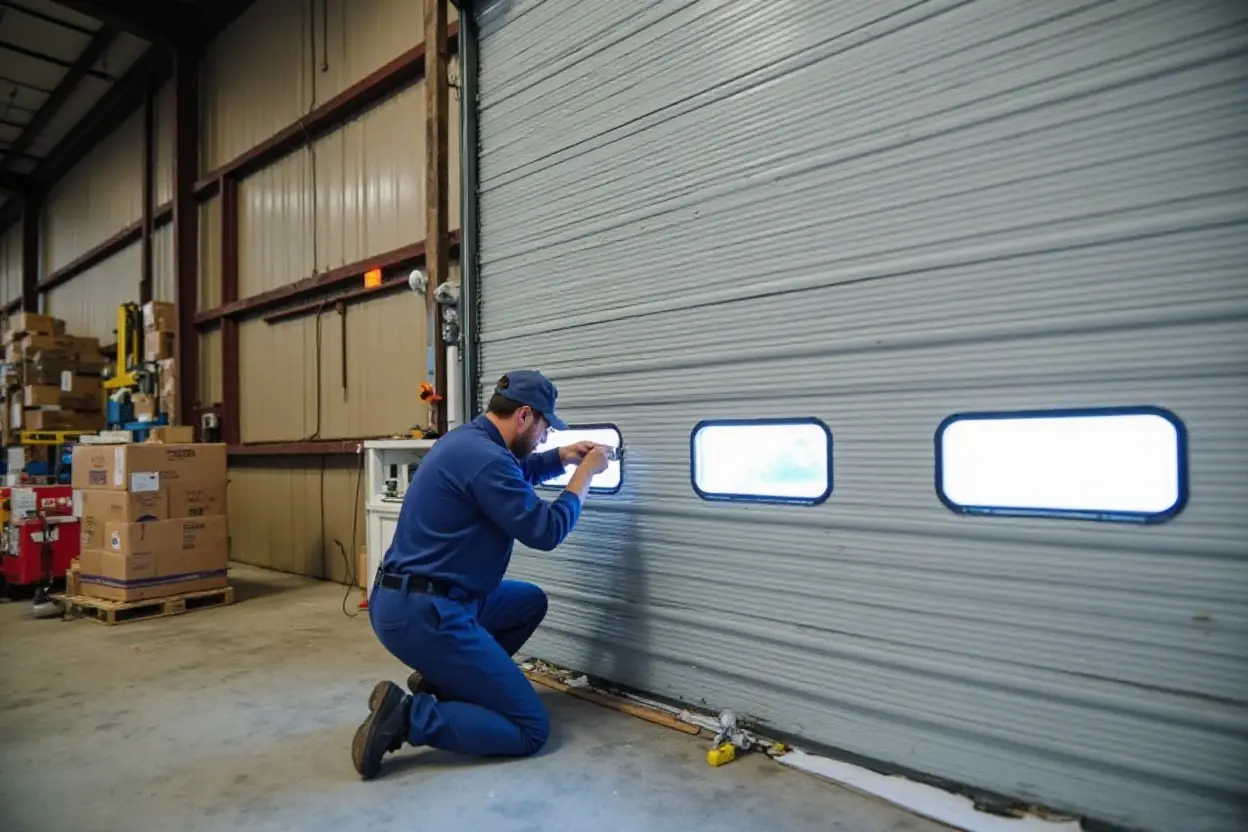
Executive entity report for Buffalo facility managers
This snapshot connects the common problems in Buffalo with the exact services and components that resolve them.
The what: core service entities
Commercial Door Repair covers rolling steel, sectional, and security grille systems. Rolling Steel Door Installation supports new builds and replacements. Industrial Overhead Doors see heavy cycles near Canalside and the Medical Corridor. Loading Dock Repair keeps dock levelers and shelters safe. Sectional Door Maintenance extends hardware life. Emergency Board-Up Service protects assets after impacts or break-ins during storms.
Problem and symptom entities include Frozen Tracks, Brittle Torsion Springs, Misaligned Slats, Off-Track Doors, Motor Burnout, Salt Corrosion, Dented Bottom Bars, and Photo-Eye Obstruction. Each maps to a clear remedy: heat or lube for frozen guides, high-cycle spring replacement, slat alignment with endlock service, re-tracking, motor diagnostics, anti-corrosion coating and parts swap, bottom bar straightening or replacement, and optical cleaning or replacement.
Component and part entities on every visit include Torsion Springs, Door Slats, Guide Tracks, Barrel Assemblies, Endlocks, Weather Stripping, Bottom Brushes, Bearing Plates, Chain Hoists, and Curtains. Appliance type entities range from Jackshaft Openers and High-Speed Rolling Doors to Fire-Rated Doors, Security Grilles, Insulated Sandwich Doors, Dock Levelers, and Radio Controls.
The where: geographic entities
Primary service in Buffalo, NY across 14201, 14202, 14203, 14204, 14209, 14210, and 14221. Neighborhood anchors include Elmwood Village, Allentown, South Buffalo, North Park, Kaisertown, Lovejoy, and the First Ward. Landmarks include Buffalo Riverworks, KeyBank Center, Canalside, the Albright-Knox Art Gallery, Peace Bridge, Buffalo City Hall, and University at Buffalo. Neighboring service areas include Cheektowaga, Amherst, Tonawanda, West Seneca, Lackawanna, Orchard Park, and Williamsville.
The who: brand authority entities
Supported brands include Overhead Door Corporation, Wayne Dalton, Clopay, LiftMaster, Genie, and Amarr. High-performance and premium support includes Rytec High-Performance Doors, CornellCookson, Raynor, and Hörmann. A mixed-brand fleet is common across Erie County. The service model matches real hardware to correct factory specifications and safety standards.
The why us: transactional and trust entities
24/7 Emergency Service reduces downtime during lake-effect events. AAADM Certified Technicians handle safety-critical door systems. Same-Day Repair is routine across Buffalo’s core industrial corridors. A Fully Insured Commercial Contractor status and OSHA Compliant Safety Testing support risk management for warehouses and food distribution sites. Preventative Maintenance Plans address Buffalo’s high-salt exposure and humidity conditions with scheduled lubrication, alignment checks, and part replacement before failure.
Coatings, metals, and seals that survive salt and grime
ASTM B117 salt fog results guide many coating choices. Powder-coated galvanized steel over zinc-rich primer performs well against edge creep after chips. For doors near the Peace Bridge or facilities that sit near road spray, a duplex system with galvanizing plus polyurethane topcoat is a smart spend. For hardware, 316 stainless on exposed fasteners, plus isolation washers, limits galvanic pairs at dissimilar metal joints. Aluminum guides should receive hard anodize for abrasion resistance from grit. Endlocks benefit from plated fasteners that pass neutral salt spray tests in the 500 to 1000-hour range.
Seals set the line between a clean bay and a dirt tunnel. Dock shelters handle high dock variance with trailers. Shelters with 40-ounce vinyl facing, welded seams, and high-wear pleats survive Buffalo gusts. Dock seals around foam frames compress well but can trap water if the slope is wrong. Angle the frame to shed meltwater. Use heat-welded skirts to reduce stitch rot from brine. Brush seals along vertical guides wipe grit from slats and cut air infiltration. Bottom astragals should sit on a straight sill. If the concrete has settled, shim the sill plate so the astragal compresses evenly. A one-eighth inch gap looks small but leaks a surprising amount of air over a long winter.
Controls and safety in a salt-heavy, high-humidity dock
Electronics prefer dry air and clean contacts. In Buffalo, docks breathe moisture. Housing operator boards in NEMA 4 or 4X enclosures makes a difference. Seal conduit entries with appropriate fittings. Add a small enclosure heater or desiccant pack to stop condensation. Radio controls should use sealed pigtails. Photo-eyes need heated housings or regular wipe-downs on sub-zero mornings. Fire-rated doors need regular drop-testing to meet code. After each brine season, run a supervised test per OSHA and NYS requirements. Verify brakes, governors, and release devices. Record test dates. Many insurance carriers ask for proof after winter losses or near-miss claims.
Where grime starts: the route from truck, to tire, to track
Grime begins at the street. Trailers bring the mix of salt, sand, and soot into the approach. Tires grind it into a paste that rides into the bay. Forklifts carry it to the guide entry points. The first slat row becomes a conveyor. Once inside the guide, the slurry binds to oil residues. That paste locks rollers, mars finishes, and causes a dragging noise at the same height each cycle. Over months, brushes show the wear line and seals stiffen. Corrosion starts at roller pins where salts sit undisturbed.
To cut the source, some Buffalo sites add a short apron wash at the top of each shift. A warm water rinse at the approach and sill line reduces the load that reaches the interior. A trench drain upgrade with heated elements near the dock face keeps that water moving. It also reduces the freeze lip that forms at the sill. A-24 Hour Door National Inc has seen a noticeable drop in operator faults at facilities that added this simple routine during January and February.
Quick picks for corrosion-prone bays
These picks reflect field results across Buffalo, from Allentown storefront freight doors to large First Ward cold-chain docks. They match the salt and grime profile and the cycle count that winter brings.
- Rolling steel slats with hot-dip galvanizing plus polyurethane topcoat for exterior bays.
- Rytec high-speed doors with heated columns for high-cycle freezer or cold dock lanes.
- LiftMaster jackshaft operators in NEMA 4X enclosures with low-temp VFD drives.
- EPDM bottom astragals and dual brush seals for guides to block spray and grit.
- CornellCookson fire-rated curtains with scheduled drop-testing for code compliance.
Local service coverage with fast arrival across Buffalo, NY
Response time matters on storm days. A-24 Hour Door National Inc dispatches across Buffalo and Western New York from locations near I-190 and major arterials. Crews reach 14203 and 14210 fast. They support Elmwood Village retail, Allentown boutique freight access, and South Buffalo warehouses. They service Cheektowaga and Amherst distribution zones, Tonawanda riverfront industry, West Seneca industrial parks, and Lackawanna steel-adjacent sites. They work near Buffalo Riverworks and the KeyBank Center, and they protect facilities near Canalside and the Medical Corridor with emergency board-ups and hardware swaps.
Many calls arrive during gusts off Lake Erie. The crew clears frozen tracks, replaces dented bottom bars, and re-seats misaligned slats while operations continue. The company keeps common sizes of torsion springs in stock for same-day replacement. That keeps doors with brittle torsion springs from going offline for days. Operators receive encoder recalibration after installs to stop drift on limit positions. Photo-eyes get new brackets that stand up to forklift bumps. Over time, that level of detail lowers total repair spend.
Field notes from Erie County docks
A manufacturer near Kaisertown ran a rolling steel door that slowed every morning. Diagnosis showed ice forming at the sill after water migrated from a mis-sloped trench. The fix was two steps. The team shimmed the sill plate and added a short apron rinse protocol. The site also switched to a low-temp dry-film lube for guides. The stutter vanished. Motor current dropped by about 10 percent on startup, based on the operator display readings over a week.
In the First Ward, a cold storage site lost a spring on a high-cycle door during a freeze. The spring had been sized for a lower cycle count, and the door was used as a main traffic lane. The replacement used high-cycle torsion springs with proper oil-tempering and length matched to the actual door weight. Since the upgrade, no spring issues appeared through two winters, and cycle logs showed a steady 25 to 30 percent daily increase over prior estimates. A heated photo-eye kit also cut nuisance stops.
On the West Seneca border, a distribution center saw recurring encoder faults on a jackshaft opener after storms. The operator case had hairline gaps, and condensation formed after each thaw. A move to a NEMA 4 enclosure with a small heater, plus sealed conduit, stopped the faults. That site added a quarterly electrical inspection where terminals are re-torqued and corrosion inhibitor is applied. No repeat faults after three quarters.
Service snapshot aligned to Buffalo’s loading bay realities
Solving Buffalo’s toughest commercial door failures
Frozen Tracks and Guides get cleared with warm water, safe de-icers, and low-temp lubricants. Snapped Torsion Springs get replaced with high-cycle sets sized for winter operation and thermal swing. Salt-Corroded Components, including rusted slats and bottom bars, get replaced with coated parts designed for chloride exposure common across Erie County. Motor Burnout is addressed with soft start drives, correct overload settings, and removal of ice bonds at the sill.
Certified technicians for industry-leading door brands
As a commercial door contractor, A-24 Hour Door National Inc services LiftMaster, CornellCookson, Wayne Dalton, Overhead Door Corporation, Amarr, Clopay, Genie, Rytec, Raynor, and Hörmann. Whether the site uses heavy-duty rolling steel curtains or high-speed fabric doors, the team confirms that hardware aligns with NYS building codes and OSHA safety practices.
Serving the industrial heart of Western New York
The team covers South Buffalo warehouses, Cheektowaga logistics centers, Tonawanda riverfront plants, and Amherst distribution hubs. Technicians stage near I-190 and the Peace Bridge to hold 60-minute response windows for emergencies near Canalside and the Buffalo Medical Corridor. Landmarks guide routing to minimize downtime in active traffic zones.
High-grade components for maximum security
Reinforced structural steel slats pair with industrial-grade weather stripping to create a strong thermal barrier. Repairs include testing the barrel assembly, endlocks, bearing plates, and chain hoists. Photo-eyes and radio controls receive service to avoid nuisance stops in winter fog. Dock levelers get hinge and lip inspections with corrosion checks inside the pit.
Frequently asked questions about Buffalo door repair
How fast can a technician reach Amherst or Lackawanna on a storm day? Dispatch runs 24/7 with priority for active shipping docks. Calls near Amherst and Lackawanna often see the truck roll in under 60 minutes depending on I-90 and local plow activity. The goal is to stabilize frozen tracks, re-seat off-track doors, and restore safe operation before peak cycles hit.
Do you provide drop-testing for fire-rated doors? Yes. The team performs annual and post-repair drop-tests per OSHA and NYS requirements. Reports include descent rate, brake checks, and reset confirmation. This testing protects insurance compliance and life safety in mixed-use buildings near UB or downtown.
Can impact damage be repaired the same day? Many slat dents and misaligned tracks can be corrected on the first visit. The truck stocks common slat sizes, endlocks, and bottom bars across Wayne Dalton, CornellCookson, and Overhead Door models. If a custom curtain is required, a board-up or temporary security grille is set to keep the dock secure until parts arrive.
Does this service include dock levelers and shelters? Yes. Loading Dock Repair includes lip hinges, pivot pins, hydraulic or airbag systems, dock seals, and shelters. Vinyl tears and frame misalignment caused by repeated trailer contact are common in Buffalo winters. The team repairs or replaces components to keep the bay sealed and safe.
What about energy loss through the roll-up? Weather stripping, bottom brushes, and proper astragal compression make a large difference. Insulated sandwich doors or insulated rolling curtains help where heat loss is heavy. High-speed doors near freezers also reduce infiltration load. Many Buffalo sites report shorter defrost cycles inside after these upgrades.
Finding help fast: roll-up doors repair Buffalo
For companies searching roll-up doors repair Buffalo because a door stuck in ice or a spring failed at shift change, A-24 Hour Door National Inc runs a true emergency line. The dispatcher understands Buffalo streets during snow events. The crew arrives with heated tools, safe de-icers, and the parts that solve the issue that day. That includes torsion springs, door slats, bearing plates, weather stripping, and photo-eyes. The service covers Erie County and Western New York with the response time that active docks require.
What a 25-point winter inspection catches before failure
The inspection is not a sales step. It is a checklist shaped by thousands of Buffalo service calls. It measures spring wear, bearing play, slat alignment, endlock security, barrel runout, operator amperage, encoder stability, photo-eye clarity, weather strip seal, brush condition, bottom bar straightness, sill level, guide cleanliness, chain hoist condition, and radio control enclosure integrity. It also reviews dock leveler hinges, deck plates, lip extension, pump or fan operation, and pit corrosion. The difference between a surprise shutdown during a whiteout and a quiet season often comes down to these checks. The report lists what to watch, what to fix now, and what to budget for next quarter.
Why Buffalo facilities trust A-24 Hour Door National Inc
The company has decades of direct work inside Erie County’s winter and maritime climate. It supports mixed-brand fleets and keeps parts on hand that match the corridor from the First Ward to Orchard Park. It operates as a Fully Insured Commercial Contractor with AAADM Certified Technicians. It maintains OSHA Compliant Safety Testing practices. It offers 24/7 Emergency Service and Same-Day Repair. It backs this with Preventative Maintenance Plans written for salt, brine, and lake-effect conditions.
The focus is on uptime for Western New York businesses. Manufacturers, food distribution, healthcare logistics, and retail receive attention that fits their real schedules. The communication is clear. The schedule is kept. Doors, operators, and dock equipment are left running clean and quiet, even after a long night of lake-effect snow.
A-24 Hour Door National Inc provides commercial and residential door repair in Buffalo, NY. Our technicians service and replace a wide range of entry systems, including automatic business doors, hollow metal frames, storefront entrances, fire-rated steel and wood doors, and both sectional and rolling steel garage doors. We’re available 24/7, including holidays, to deliver emergency repairs and keep your property secure. Our service trucks arrive fully stocked with hardware, tools, and replacement parts to minimize downtime and restore safe, reliable access. Whether you need a new door installed or fast repair to get your business back up and running, our team is ready to help.
A-24 Hour Door National Inc
344 Sycamore St
Buffalo,
NY
14204,
USA
Phone: (716) 894-2000
Website: https://a24hour.biz/buffalo
Instagram: @a24hourdoor
Facebook: 24 Hour Door
Yelp: A-24 Hour Door National (Buffalo)
X (Twitter): @a24hrdoor