<!DOCTYPE html>
Safety Requirements for Fire Rated Roll Up Doors in New York State | A-24 Hour Door National Inc
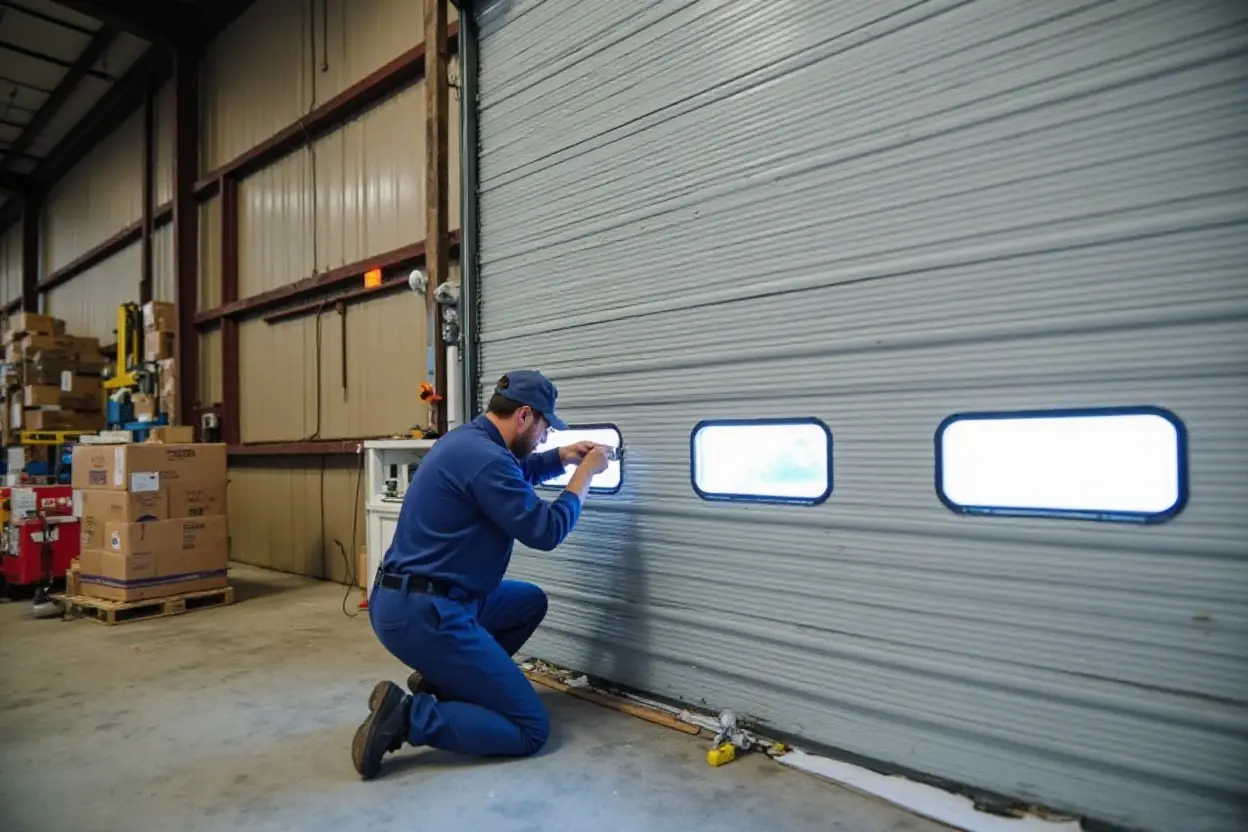
Safety Requirements for Fire Rated Roll Up Doors in New York State
A practical guide for property managers, facility engineers, and safety officers in Buffalo, NY.
What fire-rated roll up doors must do in Buffalo, NY
Fire-rated rolling steel doors in New York State must contain fire and smoke, close on command, and stay closed during a fire event. They must pass acceptance tests, yearly drop tests, and routine inspections under the adopted New York State Building Code and Fire Code. Buffalo sites add another layer. Lake-effect winters, salt corrosion near the lakefront, and repeated freeze-thaw cycles stress springs, guide tracks, chains, and releasing devices. That local wear has safety implications. Doors that pass a tag check in August may fail a drop test in January without proper maintenance.
In Erie County, most facilities fall under the New York State codes that adopt core International Code Council standards and NFPA references. Fire-rated roll up doors interface with alarms, sprinklers, and building power. They protect openings in fire barriers around loading docks, corridors, cold storage break rooms, and tenant separations. They sit near traffic lanes in South Buffalo warehouses and the First Ward riverfront, and they shield shopfronts near Canalside and KeyBank Center after hours. That mix calls for code-driven hardware plus local winter hardening.
Executive entity report for Buffalo facility teams
Primary service scope includes commercial door repair, rolling steel door installation, industrial overhead doors, loading dock repair, sectional door maintenance, and emergency board-up service. Common Buffalo symptoms include frozen tracks, brittle torsion springs, misaligned slats, off-track doors, motor burnout, salt corrosion, dented bottom bars, and photo-eye obstruction. Core components include torsion springs, door slats, guide tracks, barrel assemblies, endlocks, weather stripping, bottom brushes, bearing plates, chain hoists, and curtains. Appliance types in regular use include jackshaft openers, high-speed rolling doors, fire-rated doors, security grilles, insulated sandwich doors, dock levelers, and radio controls.
Geographic focus is Buffalo, NY and zip codes 14201, 14202, 14203, 14204, 14209, 14210, and 14221. Work spans Elmwood Village, Allentown, South Buffalo, North Park, Kaisertown, Lovejoy, and the First Ward. Landmark proximity includes Buffalo Riverworks, Canalside, KeyBank Center, Albright-Knox Art Gallery, Peace Bridge, Buffalo City Hall, and the University at Buffalo. Adjacent service areas include Cheektowaga, Amherst, Tonawanda, West Seneca, Lackawanna, Orchard Park, and Williamsville.
Brands serviced include Overhead Door Corporation, Wayne Dalton, Clopay, LiftMaster, Genie, and Amarr. High-performance lines include Rytec High-Performance Doors, CornellCookson, Raynor, and Hörmann. Trust markers include 24/7 emergency service, AAADM certified technicians, same-day repair, fully insured commercial contractor status, OSHA compliant safety testing, and preventative maintenance plans.
Codes and standards that apply in New York State
New York State adopts the International Building Code and International Fire Code with state amendments. Those codes point to NFPA 80 for fire door assemblies and NFPA 105 for smoke door assemblies when smoke protection is required. Rolling steel fire doors typically carry UL labels for fire resistance, with common listings under UL 10B or UL 10C for assemblies, along with a nameplate showing the hourly rating. Facility teams in Buffalo should confirm the rating matches the barrier. Typical ratings range from 45 minutes to 3 hours at fire walls and shaft enclosures. Most loading dock openings near tenant spaces or corridors call for 90 minutes or more, but the barrier dictates the need.
NFPA 80 lays out installation, operation, inspection, testing, and maintenance. It requires acceptance testing after installation or any repair that affects operation. It also requires an annual inspection and a functional drop test of the door and its closing system. That drop test must be recorded on a label or tag fixed to the assembly with the date, tester, and result. NYS Fire Code expects the owner to maintain records and produce them during inspections by the Authority Having Jurisdiction. In Buffalo, that may be city code enforcement or the local fire prevention unit.
NFPA 72 applies where the door receives a signal from a fire alarm system. Connections must be supervised. If the fire alarm panel is down, the door should still close on a local heat event. That is where fusible links and heat detectors matter. Most rolling fire doors include dual-release logic: a local heat release through fusible links and a remote signal through alarm relays or a releasing device. Either trigger must work in Buffalo’s low temperatures. That calls for correct link ratings and corrosion control.
How a fire-rated rolling door is built and why it matters for safety
The curtain consists of interlocking steel slats tied by endlocks. The bottom bar adds weight and a straight edge. The curtain rolls onto a barrel assembly with a governor or controlled descent device. Torsion springs or a motorized operator store energy to lift the door. Guide tracks contain the curtain and protect edges. A releasing device monitors alarm circuits and heat links. Some doors include a smoke seal package with edge seals, head box baffles, and bottom brushes. Proper weather stripping along the sill and jambs reduces smoke migration and helps with Buffalo drafts. Each part can impair a drop test if it degrades.
Misaligned slats can bind in the guides. Bent endlocks can snag. Salt corrosion can pit the bottom bar and eat through fasteners. Frozen guide tracks stop movement or cause the curtain to skew. A motor that drags in sub-zero weather can mask a damaged spring set. A good test program isolates power, triggers the release, and confirms a controlled close within the allowed speed range. NFPA 80 states that the closing speed should not be too fast for safety, and many governors include an adjustment. A quick field rule is a smooth, steady descent without bounce at the sill.
Installation and acceptance testing in Buffalo facilities
Acceptance testing confirms that the installed door meets its listing and functions as a fire door. The test includes three core checks. First, identity and labeling. The assembly must have a permanent label with the fire rating, manufacturer, and listing. Second, operation. The door must open and close without interference. The release must drop the curtain fully closed. Third, integration. Any alarm interface must trigger without lag, and local heat links must release when exposed to rated temperatures.
In Buffalo, installers need to account for uneven floors in older plants along the historic manufacturing corridor from South Buffalo through Kaisertown and Lovejoy. A bowed sill or frost-heaved dock plate can leave light gaps under the bottom bar. That hurts smoke control and fails a field check. Shimming, grouting, or a deeper bottom astragal can fix this. On lakefront sites near the Peace Bridge and Riverworks, high humidity and salt drift call for galvanized or stainless fasteners and periodic washing of tracks and bottom edges.
Annual inspections and drop testing under NFPA 80
Every fire-rated roll up door must be inspected and tested yearly. The owner must retain documentation. The inspection covers physical damage, clearances, guide alignment, barrel condition, endlocks, fasteners, and attachments to the wall. The drop test verifies that the door closes from the fully open position upon release and that it resets correctly. A two-step test is common: a first drop to verify full closure, then a reset and a second drop to verify repeatability. The technician then places a dated label on the door with results and any corrections made.
Resetting can be simple or detailed based on the operator and spring set. On a chain-hoist release door, the reset may require winding the spring barrel to the specified turns and re-engaging the chain stop. On motorized units with a governor, it may involve re-latching the releasing device and testing the operator limit switches. A Buffalo winter complicates both. Ice in the guide or a frozen bottom seal can make a good door fail the test. That is why pre-test preparation in winter months includes heat-blowing the guides, brushing ice, and using low-temperature lubricants rated for freezing conditions.
Smoke and draft control expectations
Where a wall or opening also requires smoke protection, NFPA 105 applies. Some rolling fire doors gain an “S” rating when tested for air leakage. Many CornellCookson and Raynor models offer smoke seals as a package. In Buffalo health care spaces and university buildings at UB, smoke control can be as vital as fire resistance. Doors must close without warping and must keep sub-one-inch gaps at edges with seals in good condition. Weather stripping that is too stiff in winter can slow closing. Smoke seals that are brittle from salt and cold lose flexibility. A yearly swap of bottom brushes and side seals in North Park and Allentown storefronts can keep ratings valid.
Fail-safe operation and egress considerations
Rolling fire doors are not exit doors. They protect openings; they do not serve required egress. During a fire event, they should close. That can block a path that is not designated as egress, which is permitted when doors protect fire barriers. If a path must remain open, the design must avoid placing a rolling fire door across it. For example, a security grille with a drop feature across a required exit on Canalside concourses would not be acceptable for egress. Facility teams should verify space planning with a code professional before installing a fire-rated curtain in circulation zones. This is critical during tenant fit-outs in 14203 and 14210, where operations shift with seasons and events.
Releasing devices, power loss, and alarm integration
Fire-rated rolling doors must close on signal even if building power fails. That means the release should be gravity based, spring-driven, or equipped with fail-safe motors that drop by a brake release under fire command. LiftMaster jackshaft operators with fire door control modules often integrate with alarm relays and local heat detectors. A popular option is a motor with a governor and a separate releasing device that trips the brake. The device supervises the alarm line, monitors the fusible link, and supports drop testing with a test switch.
Where sprinklers protect the opening, a waterflow input to the releasing device adds redundancy. In retrofits across Amherst and Tonawanda, older chain-hoist fire doors may lack a supervised interface. A-24 Hour Door National Inc often replaces those devices during a service call so that the door closes on a verified signal and the building panel logs the event. That improves compliance and simplifies documentation in Erie County audits.
Winterization for Buffalo conditions
Buffalo’s lake-effect winters cause unique mechanical failures that affect safety and testing. Frozen guide tracks crack brittle torsion springs because the barrel must overcome added friction. Salt corrosion near loading dock doors in South Buffalo eats through bottom bars, slat fasteners, and bearing plates. Motors face high starting torque after long cold soaks, which leads to motor burnout. Photo-eyes on non-fire rolling doors often go out of alignment from vibration and frost. While photo-eyes do not govern a gravity drop in a fire door, a stuck or iced sill can still block closure.
A practical winter setup uses low-temp lubricants on guides and chain hoists, galvanized or stainless hardware, and insulated curtains where heat loss matters. Insulated sandwich doors at dock positions reduce ice formation in the guides. Heated head boxes help in cold storage spaces downtown and in 14203 warehouses converted to logistics hubs. Where traffic salt is heavy, monthly rinse-down of bottom edges and fasteners reduces pitting. In shops near the Buffalo River and the Peace Bridge, a quarterly corrosion check with a torque test on critical bolts prevents sudden failures during a drop test.
Brand and product considerations for code performance
Buffalo facilities commonly use CornellCookson rolling steel fire doors with smoke options, Rytec high-speed doors for cold storage, and Wayne Dalton or Raynor assemblies in mixed-use industrial spaces. Overhead Door Corporation, Amarr, and Hörmann lines are also common. For operators, LiftMaster jackshaft units with fire modules and Genie commercial controls appear in many plants. Each brand has its own reset steps and governor styles. Some use floor-level test stations. Others require head box access. Record those procedures in the site safety binder and keep replacement fusible links on hand.
High-speed rolling doors serve production and cold storage but are not always fire-rated. Where a high-speed fabric door is present for workflow and a rated barrier is required, the design stacks a fire-rated rolling curtain above or behind the high-speed door. That curtain drops on release, while the high-speed unit parks out of the opening. This is common in refrigerated spaces in 14221 and Amherst. The fire curtain must pass annual testing as a separate assembly.
Maintenance programs that satisfy NYS expectations
Preventative maintenance supports compliance in two ways. It keeps the door ready to pass a drop test and it builds the record that auditors request. A 25-point industrial door safety inspection provides a clear baseline. It covers visual checks of slats, endlocks, and guides; torque checks on bearing plates; chain hoist and barrel condition; operator limit function; fusible link status; smoke seal pliability; and corrosion at the bottom bar and sill. It also tests alarm input and verifies the governor speed. In Buffalo, the plan should add a winter readiness pass in late fall and a spring salt-damage audit.
OSHA expectations for lockout/tagout apply during service. Electric operators and alarm circuits must be isolated before hands go near the barrel or chain drive. For a drop test, a technician may isolate the operator but leave the releasing device active while a spotter watches the opening. The sequence must be clear. After the test, the tech resets and documents readings. The owner keeps those records for inspection by the city or fire marshal.
Repairs and upgrades that move the needle in Buffalo
Many failures tie straight to environment. Replacing snapped torsion springs and rusted door slats restores industrial workflow and reduces emergency calls. Upgrading a governor improves descent control and pass rates. Swapping a mechanical link set for a supervised releasing device tightens alarm integration. Adding side and head smoke seals reduces air leakage in windy corridors near Buffalo City Hall and the UB campuses. Where a door sees repeated impact from forklifts, swapping to heavier endlocks and reinforcing the bottom bar cuts deformation and binding.
On the equipment side, a Rytec high-performance door may handle daily cycling for cold storage, while a CornellCookson rated curtain protects the opening during a fire. Pairing both meets performance and code. For operators, factory-certified service on LiftMaster jackshaft systems reduces nuisance trips and supports documented testing. In older buildings near Allentown or Elmwood Village, a new barrel assembly with modern bearings and a chain hoist reset kit can stabilize closing speeds across seasons.
Where service teams operate and how fast they arrive
A-24 Hour Door National Inc supports roll up door repair across Buffalo with rapid response to 14203 and 14210. Technicians stage near I-190, the Skyway, and routes serving Canalside, the Buffalo Medical Corridor, and large docks near Riverworks. Most calls in South Buffalo, Kaisertown, and the First Ward see on-site arrival within about an hour for emergency board-ups. Amherst, Tonawanda, West Seneca, Lackawanna, Orchard Park, Cheektowaga, and Williamsville are covered through Western New York dispatch. The team knows the realities of winter driving and lake-effect bursts. Vans carry low-temp lubricants, link kits, and replacement endlocks during stretches of sub-zero days.
The company handles roll-up doors repair Buffalo clients ask for day and night. That includes frozen tracks, motor burnout in unheated bays, and broken bottom bars after plow strikes. Many calls happen after an event at KeyBank Center or near Canalside when facilities cycle doors late and temperatures drop fast. The crew also supports university maintenance at UB with annual drop testing during scheduled downtimes.
Solving Buffalo’s toughest commercial door failures
Frozen tracks and guides respond to heat, de-ice, and low-temp lubricants that do not gum in the cold. Snapped torsion springs receive high-cycle replacements sized for the actual curtain weight and lift drum diameter. Salt-corroded components call for new slats, bottom bars, and stainless fasteners. Off-track doors need a full alignment and endlock swap. Motor burnout often traces to high friction and bad limit settings after a cold snap; once corrected, a motor test under warm conditions confirms health.
A diagnostic run includes a hand-chain test from fully up and from mid-travel to feel for binding. The tech checks barrel play and bearing plate fasteners. A speed test verifies the governor. Where a releasing device ties to the fire alarm, a supervised release test validates both pathways. Tagging follows NFPA 80 format and includes any corrective action taken that day.
Serving the industrial heart of Western New York
From the warehouses of South Buffalo to riverfront plants in the First Ward, many doors guard fire barriers around process rooms and shipping lanes. Cheektowaga and Tonawanda host modern logistics hubs that run late hours and need verified fire drops before peak season. Crews reach these sites quickly from staging near the Peace Bridge and the I-190 corridor. Repairs near the Albright-Knox Art Gallery and Buffalo City Hall demand low-visibility work and tight documentation for city properties, while retail along Elmwood Village and Allentown calls for after-hours drop tests and quiet resets. In 14201, 14202, and 14203, older brick walls often need extra anchorage for guide tracks; that is part of a safe installation.
High-grade components that pass inspections
Passing a drop test starts with straight, clean guides, proper endlocks, and a barrel assembly without flat spots. Reinforced steel slats resist denting. Industrial-grade weather stripping and bottom brushes reduce smoke leakage. Bearing plates with correct torque values hold alignment. Chain hoists with anti-backs are safer to reset. Door curtains that match the rating label support acceptance by the Authority Having Jurisdiction in Buffalo. Each component matters when the inspector watches the descent and checks labels.
Field notes from Buffalo sites
At a South Buffalo cold storage dock, a fire curtain failed a winter drop test due to ice at the sill. The fix used a heated sill mat during storms and a seasonal swap to a flexible bottom seal. The door passed the retest. In a First Ward metal shop, salt had eaten through endlock rivets on windward edges. Replacing endlocks with stainless hardware and adding a quarterly rinse schedule stabilized the curtain. At a 14210 logistics bay, a LiftMaster jackshaft operator tripped the breaker during tests. The root cause was a mis-set limit that forced the motor to lift against a stop. After recalibration and a governor check, the door ran clean and dropped within the accepted speed band.
Frequently asked questions about Buffalo fire door safety
How fast can a crew reach Amherst or Lackawanna for an emergency call? Dispatch runs 24/7 with field techs across Erie County. Typical response ranges from forty-five to ninety minutes based on weather. During lake-effect events, the coordinator gives a live ETA.
Do technicians perform drop-testing for fire-rated doors? Yes. Testing follows NFPA 80. It includes inspection, a two-step drop test, reset, and a dated tag. If a device links to the alarm, a supervised test call verifies both paths. Documentation goes to the owner.
Can crews repair doors damaged by vehicle impact? Yes. Typical repairs include slat and bottom bar replacement, guide track realignment, new endlocks, and checks on the barrel assembly and bearing plates. If the wall is out of plumb, shims and anchor upgrades restore alignment.
Are service teams certified for specific brands? Technicians service LiftMaster jackshaft operators, Wayne Dalton commercial systems, and high-performance Rytec doors among others. Factory resources and parts inventories in WNY speed up same-day fixes.
Will winter conditions void a passed test later in the year? Not by rule, but conditions can degrade performance. That is why Buffalo facilities benefit from a mid-winter check for doors that protect critical barriers, even if the annual test occurred in warmer months.
Quick compliance checklist for Buffalo facilities
- Confirm each fire-rated roll up door has a visible rating label and current drop-test tag.
- Verify alarm and local heat release both trigger a full, controlled descent.
- Inspect slats, endlocks, guides, and bottom bar for corrosion and binding.
- Swap smoke seals and bottom brushes that are brittle or gapped in cold weather.
- Document tests and repairs, and schedule the next annual and a winter readiness check.
Roll-up doors repair Buffalo | A-24 Hour Door National Inc
Facilities across Buffalo, NY rely on fast, correct service to keep fire-rated rolling doors safe and compliant. A-24 Hour Door National Inc offers roll-up door repair, commercial door service, and industrial door maintenance for Erie County. The team supports high-speed industrial door reliability, winter-ready torsion spring replacement, and 24/7 emergency security across Western New York. Work spans Elmwood Village, Allentown, South Buffalo, North Park, Kaisertown, Lovejoy, and the First Ward, and extends to Cheektowaga, Amherst, Tonawanda, West Seneca, Lackawanna, Orchard Park, and Williamsville.
Brands covered include Overhead Door Corporation, Wayne Dalton, Clopay, LiftMaster, Genie, Amarr, Rytec High-Performance Doors, CornellCookson, Raynor, and Hörmann. Services include AAADM certified technicians, same-day repair, OSHA compliant safety testing, and preventative maintenance plans. The offer is simple and direct: request a 25-point industrial door safety inspection and a code-focused drop test. Get documentation ready for inspectors and keep operations moving through Buffalo’s toughest weather.
Call now: Buffalo 716 area dispatch, 24/7. Ask for emergency board-up or fire door drop-testing. Schedule work near Buffalo Riverworks, Canalside, the Peace Bridge, and key corridors in 14203 and 14210. Book same-day repairs for frozen tracks, broken springs, misaligned slats, salt-corroded bottom bars, and motor issues. Keep your door safe, compliant, and ready to close when it counts.
A-24 Hour Door National Inc provides commercial and residential door repair in Buffalo, NY. Our technicians service and replace a wide range of entry systems, including automatic business doors, hollow metal frames, storefront entrances, fire-rated steel and wood doors, and both sectional and rolling steel garage doors. We’re available 24/7, including holidays, to deliver emergency repairs and keep your property secure. Our service trucks arrive fully stocked with hardware, tools, and replacement parts to minimize downtime and restore safe, reliable access. Whether you need a new door installed or fast repair to get your business back up and running, our team is ready to help.
A-24 Hour Door National Inc
344 Sycamore St
Buffalo,
NY
14204,
USA
Phone: (716) 894-2000
Website: https://a24hour.biz/buffalo
Instagram: @a24hourdoor
Facebook: 24 Hour Door
Yelp: A-24 Hour Door National (Buffalo)
X (Twitter): @a24hrdoor